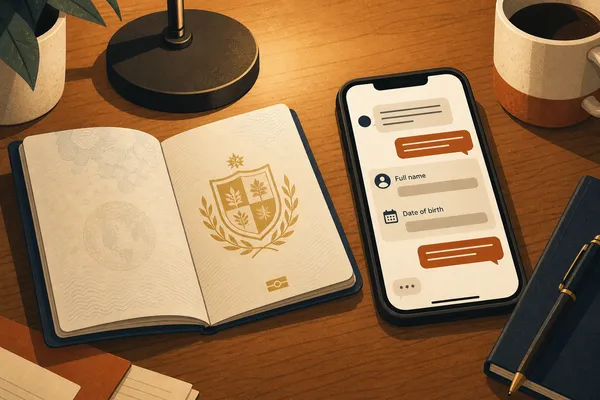



Someone lands on your site because an ad worked, or a cousin forwarded the link. They tap Contact. The form asks for a name, an email, a phone number, and a box that says “How can we help?”
They start. Then they get a call. Or they do not have the policy number handy. Or the form just feels like homework. They close the tab.
An hour later they message a competitor on WhatsApp, because that is where they already talk to their sister, their doctor, and anyone who actually answers.
You spent money to get them to the page. The page handed them a form. The form lost.
If that sounds familiar, replace the contact form before you spend another dollar on traffic. The data you lose when someone closes a form is the same leak, just quieter.
They were never going to come back to the tab
This is the part businesses keep getting wrong. The contact form assumes people will stay on your website long enough to finish an errand they did not come to do. Most of them are on a phone. Half of them already have WhatsApp open in the next swipe.
A WhatsApp button looks like progress. One tap, they are in a chat. Volume goes up. Then your Saturday is 40 half-finished threads, photos of documents with no names attached, and a voice note you will listen to on Monday if you remember.
The button moved the conversation. It did not collect a case.

A chat without a shape is just a messier inbox
People like WhatsApp because it feels like talking. Businesses like forms because they need structured answers. Those two wants have been fighting for a decade, and the usual compromise is ugly: send a Typeform link inside the chat. The person has to leave WhatsApp, wait for a mobile page, and start over. A lot of them never do.
The other compromise is a generic chatbot that “handles WhatsApp.” It answers FAQs. It cannot tell you whether the person is eligible, what documents they have, or which teammate should own the thread. When a human has to jump in, the bot’s memory evaporates.
What you actually need is the same conversation you would run on the website, running where the person already is.
Same Intake Bot. Different door.
In ioZen, a WhatsApp number does not get its own bot. You connect a number you already manage in Meta, in any country, or have us provision a US number. Then that number runs the Intake Bot you already built.
Conditional logic still works. Select questions show up as buttons or lists. People can send photos, PDFs, audio, and video from the chat, and those files land on the submission the same way a web upload does. Calculated fields and agent blocks run too. When the conversation finishes, you still get a contact, a record, and a card on the Process Board.
Nothing about the bot changes to support this. That is the point. You do not maintain two intakes.
If someone needs a person, you pause the bot and move the thread to Team Inbox. A teammate replies as themselves. When they hand it back, the bot resumes the in-flight submission instead of starting over.
WhatsApp Channel and Team Inbox are on Business and Enterprise. Messages use purchased credits, not your monthly plan allotment. The WhatsApp guide covers connecting a number and routing. The feature lives on the features page if you want the short version.
Put the door where they already stand
Conversational intake already beats a wall of fields on a website. Running that conversation on WhatsApp just stops asking people to come back to a page they left.
You still need a website. You still need a form-shaped hole on it, which is why we keep telling people to replace the contact form first. Once that conversation exists, putting it on WhatsApp is the obvious next door.
The firms that keep winning are the ones that answer tonight, in the app the person already has open. Not the ones with the prettier Contact Us page.
Tags:

Written by
Jay Moreno
Founder & CEO, ioZen
Technical founder with 20+ years building platforms across Latin America. Founded PATIOTuerca (first Ecuadorian startup to IPO), Vive1, Evaluar.com, and Taxo. Now building ioZen to liberate humanity from bureaucracy.