



Picture someone trying to request a quote from a contractor while sitting in their car.
They know what they need. They can explain it clearly. “I want to redo my kitchen, probably in early June. The cabinets are old, the countertop is cracked, and I want to know if we can add an island.”
Then the form loads.
Name. Email. Phone. Project type. Budget. Desired start date. Photos. Address. Dropdown. Checkbox. Textarea.
The person had the answer in their head. The form made them translate it into fields.
That translation tax is everywhere. It is worse on mobile, worse when the answer is messy, and worse when the person is already doing something else. The old internet answer was simple: make the form shorter. Fewer fields, fewer problems.
That helps a little. It does not fix the shape of the interaction.
The better question is: why are we still making people type everything?
Speech is not enough
Voice input has existed for years. Tap the microphone on your keyboard, talk, and your phone turns sound into text.
That is useful. It is also limited.
If someone says “next Friday at 3pm,” a normal form can store those words in a box. But your team still needs to know the actual day and time. The calendar needs to understand it. The person following up needs to trust it.
That difference matters.
Most voice features stop at transcription. They turn speech into a paragraph, then hand the mess back to the business. Someone still has to make sense of it later.
For intake, speech has to become an answer your business can use.
That is what we shipped in the spring release: voice input across every field type in ioZen.
Long-answer questions can still capture the full story. That part feels familiar. The more interesting part is what happens when someone answers a question that usually forces them into a specific format.
“Next Friday at 3pm” becomes the right date and time.
“Five five five one two one two” becomes a phone number.
“Email and text, but not WhatsApp” becomes the right contact preferences.
Dates, phone numbers, choices, yes-or-no questions, contact preferences. The respondent can answer the way a person talks, and the Intake Bot turns that into the clean information your team needs.
Audio never leaves the device. Voice ships on by default for new bots. English and Spanish are both supported.
This is not a microphone bolted onto a form.
It is an intake system learning how to listen.
The mobile problem
Voice only matters if the rest of the experience can keep up.
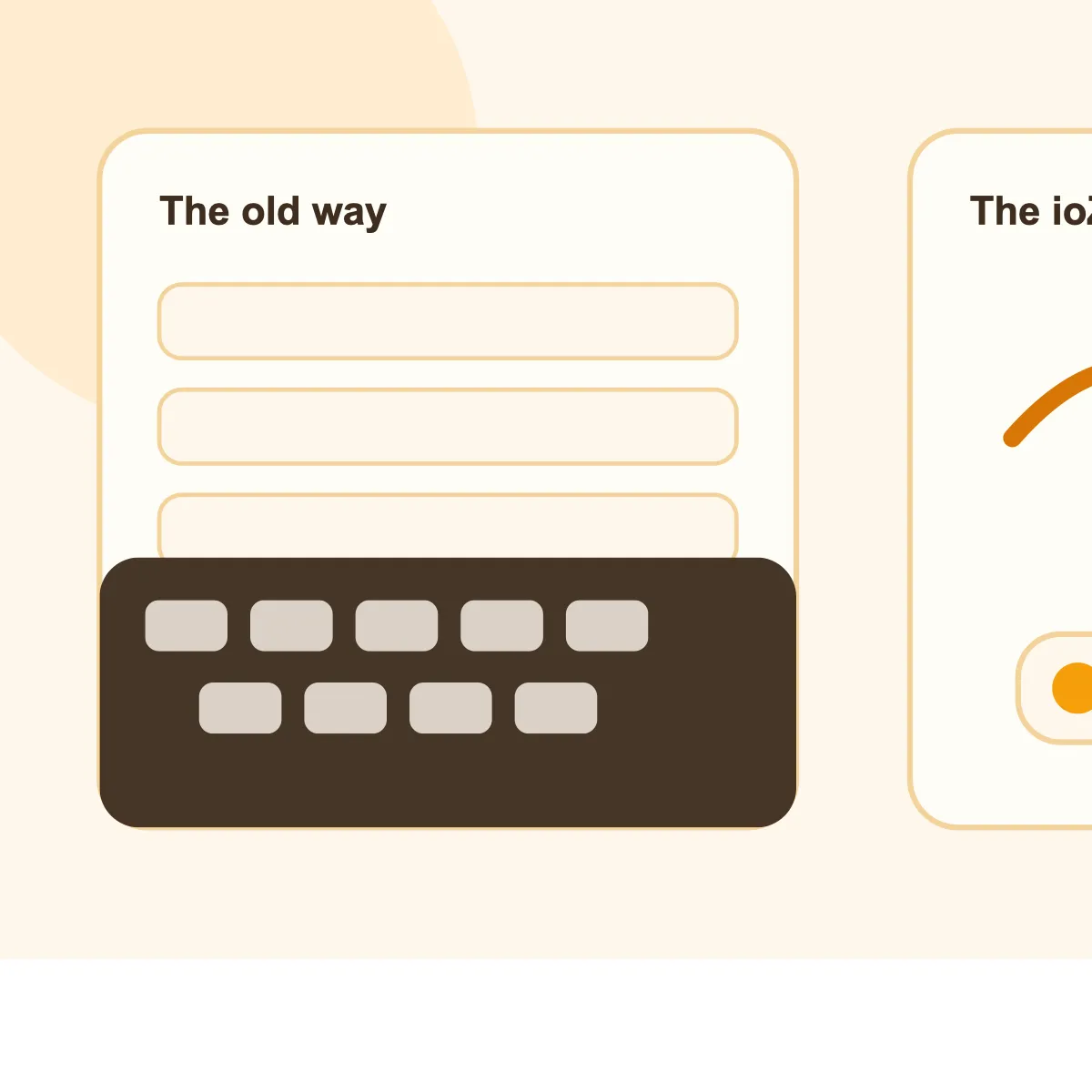
Anyone who has tried to complete a long form on iPhone knows the failure mode. The keyboard jumps. The viewport shifts. You answer one field, tap next, the keyboard disappears, the page moves, and now you have to find your place again.
Nobody rage-quits because of one keyboard flicker. They quit because the page keeps reminding them that this process was not built for them.
So we rebuilt the public chat around a message box that stays in place.
The message box stays there as the Intake Bot moves between questions. The iOS keyboard no longer disappears between answers. Text, dates, choices, location, file uploads, and final submission all move through the same rhythm.
The advance button stays in the same pixel position. Sometimes it says Continue. Sometimes it says Skip. Sometimes it says Send. The hand does not have to relearn where to go.
That sounds boring until you feel it.
Good intake is mostly boring in this way. The product gets out of the way. The respondent can keep answering. Your team gets the data.
The bot still has to ask the right questions
Voice is not magic. A bad Intake Bot with a microphone is still a bad Intake Bot.
If the questions are in the wrong order, voice will not save it. If the bot asks someone to upload a file before checking whether they have one, voice will only make the awkwardness faster. If the bot sends someone down the wrong path, the conversation still breaks.
That is why this release also changes how new Intake Bots are created.
The Smart FlowApp Wizard now drafts a short conversation plan before building anything. Who is this for? What should the bot ask first? When should it ask follow-up questions? What kind of request should your team treat as urgent? You approve the plan, or you tell the AI what to change in plain English.
Only after that does ioZen build the Intake Bot.
Behind the scenes, ioZen now takes more care with the draft. One part writes the conversation. Another checks that each question knows how to handle the answer, when to ask a follow-up, and when to move on. A single voice keeps the tone consistent from welcome to farewell.
That matters because conversational intake is not a chatbot wandering around. It is a guided conversation that feels natural for the person answering and stays reliable for the team receiving the submission.
Pure AI chatbots fail for business intake when they make every turn up as they go. Traditional forms fail because they ask everything at once. ioZen sits in the middle: predictable where the business needs reliability, conversational where the human needs room to explain.
Voice makes that middle feel obvious.
What changes now
A respondent can answer without fighting the keyboard.
A business can collect clean answers without forcing people to think like a form.
A team can receive a cleaner submission because the conversation captured the answer in the right shape the first time.
That is the real shift. Not voice as a novelty. Voice as the front door to better intake.
We also shipped a lot around it: a new integrations directory, custom share URLs, branded Open Graph images for published bots, feedback bots inside the product, and pricing that now includes unlimited submissions on every paid plan.
But the center of gravity is simple.
Forms make people adapt to the system. Intake Bots should adapt to the person, then give the business exactly what it needs.
That is what voice changes.
You can try the new experience in the live demo, or read the side-by-side breakdown of what happens when you replace a 15-field form with a conversation. If you want the psychology behind why the old format loses so many people, start with why your brain hates forms.
Tags:

Written by
Jay Moreno
Founder & CEO, ioZen
Technical founder with 20+ years building platforms across Latin America. Founded PATIOTuerca (first Ecuadorian startup to IPO), Vive1, Evaluar.com, and Taxo. Now building ioZen to liberate humanity from bureaucracy.