


A displaced person reaches question 15 of 20. Their phone battery dies. The session times out.
For your M&E database, that person never existed.
No partial data. No follow-up. No case. Just a gap in the spreadsheet where a human being should have been.
This happens thousands of times a day across humanitarian operations. Not because field workers are careless. Because the tool they were given was never designed for the conditions they work in.
The Kobo era
KoboToolbox deserves credit. When it launched, it gave the humanitarian sector something it didn’t have: a free, purpose-built tool for data collection in low-connectivity settings. Before Kobo, organizations were relying on paper, Excel, or tools built for office environments. Kobo worked offline. Kobo handled complex skip logic. Kobo spoke the language of M&E frameworks and donor reporting requirements.
For years, it was the best available option. Thousands of organizations used it. Millions of forms were deployed. It moved the entire sector forward.
The people who built Kobo understood the problem. They just built for the technology that existed at the time.
That technology was the form. A single screen, many fields, submit at the end. It worked well enough when the alternative was a clipboard.
But “well enough” has a cost. And in 2026, that cost is measurable.
The cost of static forms in 2026
Here is what the humanitarian data collection numbers actually look like:
30% completion rates on forms longer than 20 fields. The other 70% of sessions vanish. Some people give up at the wall of questions. Others get interrupted by life: a child, a queue, a phone that dies. The form does not care. Either you submit all 40 fields, or you submit nothing.
Zero partial saves. When a session drops, everything disappears. A field worker in a camp in Cox’s Bazar loses signal for ten seconds. The beneficiary answered 14 questions. All gone. The field worker has to start over, or the beneficiary goes home, and the organization never knows they came.
Three months from collection to analysis. Data lands in a spreadsheet. Someone has to clean it: remove duplicates, fix the misspelled names, standardize the dates. By the time the M&E team can see what the data says, the operational window to act has closed. You are making decisions with last quarter’s data about this quarter’s crisis.
Manual data entry errors. A field worker reads an ID card and types the number by hand. One digit wrong. The record duplicates. The case never links to the household. A person registered twice gets double rations. A person registered zero times gets nothing.
No real-time routing. Every submission lands in the same spreadsheet regardless of vulnerability level. A protection case sits next to a routine food request. Someone has to read every row and decide what goes where. That takes time. In the meantime, the person who needs urgent help waits.
These are not edge cases. This is the normal operating reality for humanitarian data collection in 2026.
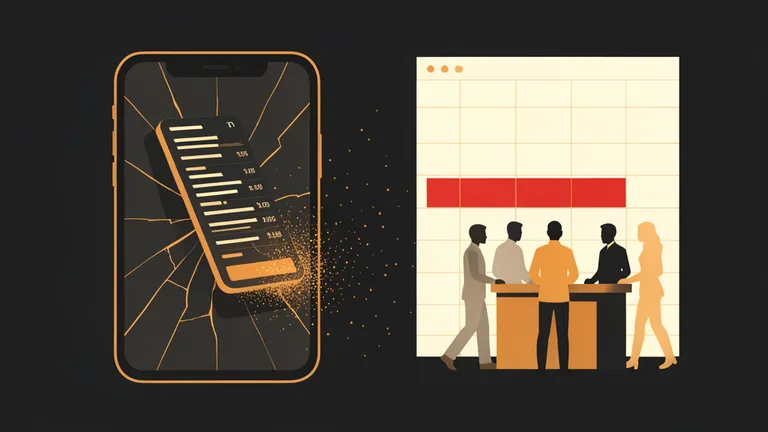
KoboToolbox was built for a world where this was acceptable. That world is gone.
What ioZen does differently
ioZen replaces the static form with a conversational Intake Bot. The difference is not cosmetic. It changes what happens at every step of the process.
One question at a time. Instead of showing all 40 fields on one screen, ioZen presents one question per screen. The bot skips irrelevant sections based on earlier answers. A household with no children never sees the child-specific module. Completion rates in conversational intake reach 90% or higher. The beneficiary experiences it as a conversation, not an interrogation.
Voice input on every field. Any question can be answered by voice. The beneficiary taps the microphone and speaks. The AI transcribes, removes filler, and extracts structured data. Someone who says “I arrived the morning after the storm, it was a Tuesday” gets a clean date entry. No keyboard required. This matters in contexts where literacy is low or the person is holding a child while they answer.
Partial submission capture. ioZen saves each answer the moment the beneficiary provides it. If the session drops at question 8, the record still reaches the Process Board with everything captured up to that point. The field team knows exactly who this person is, what they said, and where the conversation stopped. Nobody disappears from the database because their battery died.
Document scanning. Beneficiaries photograph their ID card, ration book, or registration document. The AI reads name, ID number, and dates directly from the image. No manual typing means no transcription errors. The right ID number linked to the right person, every time.
Real-time scoring and routing. The moment a registration completes, the AI scores it against dimensions your program defines: vulnerability level, urgency, protection risk, documentation status. High-vulnerability cases route to the protection officer as a card on their Process Board. Routine food requests go to the distribution team. The M&E coordinator sees a live dashboard, not a spreadsheet that gets reviewed next quarter.
Each of these maps to a specific failure in static form collection. Completion rates solve survey fatigue. Partial saves solve data loss. Voice input solves literacy barriers. Document scanning solves transcription errors. Real-time routing solves the three-month lag.
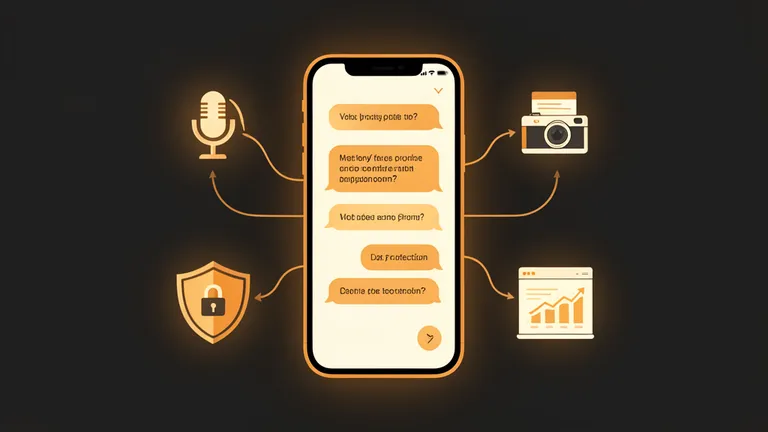
The form does none of these. It was never designed to.
Security as protection
In humanitarian work, data protection is not compliance theater. It is a protection issue.
A refugee’s ID number in the wrong hands is a physical risk. GPS coordinates of a displacement camp shared with the wrong party can endanger lives. The relationship between data and safety is direct.
ioZen treats sensitive data accordingly.
Private Fields. Mark any field as Private. National ID numbers, GPS coordinates, displacement origin, prior registration IDs: those fields store separately and never get sent to the AI model. The Intake Bot collects them. The AI cannot read them. Your team can, the model cannot.
Encrypted Fields. Fields marked Private and Encrypted store in a separate vault, not the main database. Use this for government ID numbers, biometric references, or location data where exposure would create physical risk for the beneficiary.
GPS with explicit consent. Location capture requires the beneficiary to say yes before any coordinates are recorded. Your program controls whether location is requested, how it is labeled, and who can see it. No background tracking. No silent collection.
Certified infrastructure. ioZen runs on Supabase, Vercel, and Cloudflare — all SOC 2 Type II certified. A platform-level SOC 2 audit is on our roadmap. All traffic uses TLS 1.3. A Data Processing Agreement is available on request for programs with donor data requirements.
KoboToolbox stores form data in the same database, accessible to anyone with project access, with no field-level encryption. For routine surveys that might be fine. For protection cases, it is a risk.
The meeting that confirmed it
Last Friday we sat down with a humanitarian information management specialist who has spent years deploying data systems across 30 countries. Their organization works on information management, monitoring and evaluation, and technology for humanitarian response. They contract with EU, UNICEF, and UNDP.
We showed them ioZen for thirty minutes.
They got it immediately. Not the AI part. Not the conversational interface. What they understood right away was the partial save. The idea that a dropped session does not mean a lost person. That a field worker in a low-connectivity environment does not have to choose between starting over and giving up.
They had lived the problem. Three-month analysis lags. Duplicates from manual entry. Beneficiaries who disappeared from the system because the form did not save their partial data. They knew the cost of every gap in the spreadsheet because they had been the person trying to fill them.
We showed them how a high-vulnerability case routes automatically to the protection officer. How an ID card scan eliminates the transcription error that creates duplicates. How the M&E dashboard updates in real time instead of waiting for someone to clean a spreadsheet.
They did not need to be convinced. They needed to see that someone had built it.
The real metric
The humanitarian sector measures a lot of things. Form completions. Data quality scores. Indicator achievement rates.
The metric that matters: people reached. Cases caught before they fall through. Decisions made with this week’s data, not last quarter’s.
A 30% completion rate means 70% of the people who walked up to your registration point walked away without a record. Those are families who needed food and left with nothing. Women who needed protection and became invisible in the system.
ioZen’s 90% completion rate is not a product metric. It is the difference between 300 and 900 families registered out of every 1,000 who show up.
With partial saves, a dropped session still gives you 14 answers and a field worker who knows where to pick up instead of starting from zero.
With real-time routing, a protection case reaches the right officer the same day instead of waiting three months in a spreadsheet.
These change who the system can reach and how fast it can act.
KoboToolbox was the answer. The question has changed.
KoboToolbox solved a real problem: how do you collect structured data in places with bad connectivity and limited resources? For the technology available at the time, the answer was the form. One screen, many fields, submit at the end, sync when you can.
That answer worked. It served the sector well for years.
But the question has changed. The question is no longer “how do we collect data?” The question is “how do we make sure every person who needs help gets into the system, stays in the system, and reaches the right team before the window closes?”
Static forms cannot answer that question. They were not built for it.
Conversational intake can.
ioZen is free for NGOs. One FlowApp, 1,000 AI credits, unlimited submissions. Voice input, partial saves, Private and Encrypted fields included. Start a FlowApp today at iozen.ai or learn more about how ioZen works for nonprofits.
Questions about nonprofit pricing or need a Data Processing Agreement? Email [email protected].
Tags: