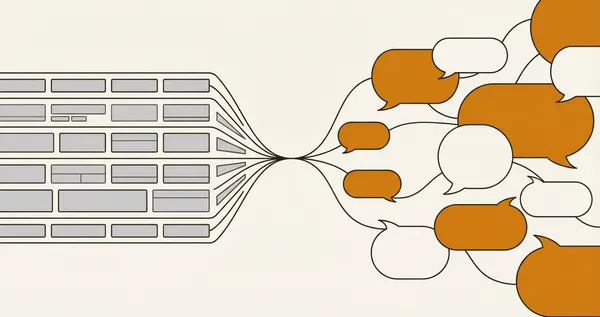



Carlos runs a small P&C book. Two producers. A quote form on the website that asks for policy type and a phone number, then promises “we’ll be in touch.”
What happens next is the real intake. A 25-minute call to collect roof age, claims in the last five years, occupancy, current limits, and whether the building has a basement. Half the people who started the form never take that call. The ones who do are tired of repeating themselves before anyone has priced a thing.
The form did not fail because insurance is complicated. It failed because it collected a name and left the score for a human.
Incomplete is not the same as unqualified
Producers treat every inbound the same because they cannot see the holes. A personal auto inquiry with a clean record and a current policy sits in the same inbox as a commercial building with three locations and no loss history attached. Someone has to open both and go hunting.
That hunting is the job nobody priced into the commission.
What you want is simpler than another generic AI score. You want a number you can explain. Roof age, claims, occupancy, construction type: each answer adds to a total, or it does not. If two of those questions are blank, the total is unfinished. The card should say so. Nobody should spend a morning chasing a quote that cannot be bound yet.

A running total, not a vibe
ioZen can total a group of answers into a hidden number field. You tag the questions that belong together, pick sum or average, and optionally attach bands: “ready to quote,” “needs review,” “refer.” Unanswered items stay out of the total and get flagged, so a routing rule can refuse to move the case until the score is complete.
A content block can show the running total mid-conversation if you want the respondent to see it. The display is live. The value that gets saved is recomputed on the server when they submit, on the website and on WhatsApp.
Record lookups help when the label a person picks is not the number you need. They choose “masonry” or “frame.” The table behind that question can carry the points. The submission stores what they said. The score uses the value.
This is on every plan. The field reference is in calculated fields.
It is a different tool from Submission Intelligence. That one reads the whole conversation and applies dimensions you define after the fact. Calculated fields are the arithmetic you want in the middle of a quote. Visible. Hard to argue with.
Price the complete ones first
On a broker Process Board, the useful morning is the one where complete quotes are already in a column and the Swiss-cheese ones are waiting for a document or a single follow-up. Assign the ready cards. Leave the incomplete score alone until the missing answers land.
If the quote still starts as a website form, replace that form so the conversation can collect roof age without dumping eleven fields on one screen. If your book lives on WhatsApp more than it lives on Chrome, run the same Intake Bot there.
The score is not there to make intake look clever. It is there so a producer stops calling people who never finished telling you what they need.
Tags:

Written by
Jay Moreno
Founder & CEO, ioZen
Technical founder with 20+ years building platforms across Latin America. Founded PATIOTuerca (first Ecuadorian startup to IPO), Vive1, Evaluar.com, and Taxo. Now building ioZen to liberate humanity from bureaucracy.