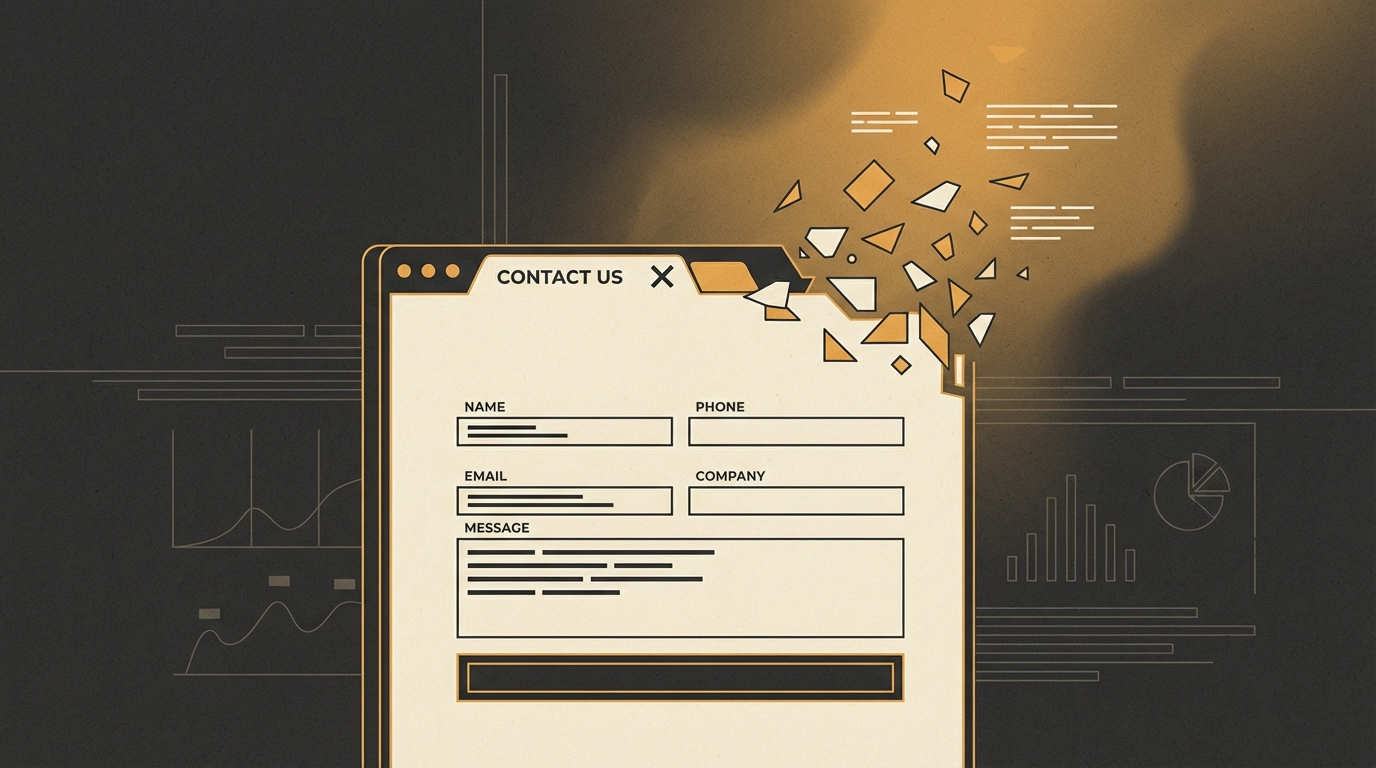


81% of people who start filling out a form never finish it.
Not because they changed their mind. Not because your offer was wrong. Because the form itself lost them, and the reason has nothing to do with how long it is.
Most advice on this problem focuses on reducing fields. Fewer questions, higher completion rates. That helps at the margins. But it doesn’t fix the root cause, because the root cause isn’t length. It’s the format itself, and understanding why takes you back to a paper published at Harvard in 1956.
The 7 vs 11 problem
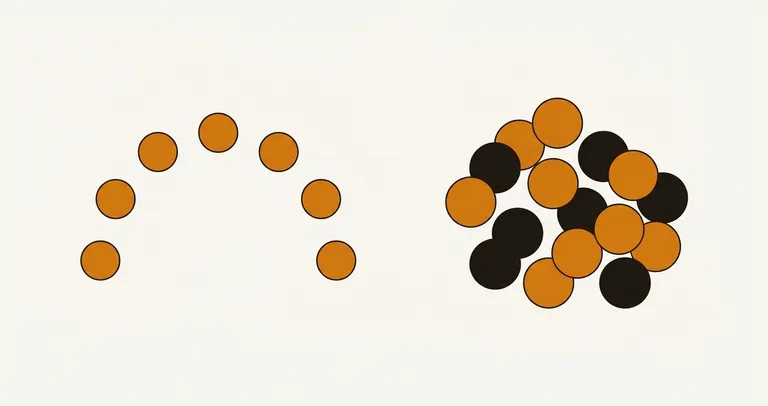
In 1956, psychologist George Miller published “The Magical Number Seven, Plus or Minus Two” in Psychological Review. It became one of the most cited papers in the history of cognitive psychology. The finding is simple: the human brain can hold approximately seven items in working memory at any given moment.
Not ten. Not fifteen. Seven.
The average web form asks for eleven fields.
When someone lands on your contact form, their brain has to simultaneously process, evaluate, decide how to answer, type out, and track eleven separate pieces of information. That’s not a preference thing. It’s not a “this generation has short attention spans” thing. It’s a hard biological ceiling that has been documented and replicated for seventy years.
You’re not losing people because your form is boring or your design is bad. You’re asking their brain to do something it can’t do comfortably, and at the first moment of friction, they leave.
The research is consistent: 81% never finish, and 67% never come back. The average time someone spends on a form before abandoning is under two minutes. You have less than two minutes to capture someone who was already interested enough to click.
Forms feel like tests
There’s a second mechanism at work, and it explains why even short forms create more friction than a simple conversation.
Research suggests that filling out a form activates similar cognitive patterns to taking an evaluation, the mild stress of being assessed before you’ve had a chance to explain yourself. It’s subtle. Most people couldn’t name it. But it’s there, and it nudges people toward the exit before they consciously decide to leave.
Think about it from the respondent’s side. Someone lands on your page wanting what you offer. They click “contact us.” And immediately they’re faced with a list of questions where every answer will be judged. Budget. Timeline. Company size. Goals.
That’s not a conversation. That’s an application form.
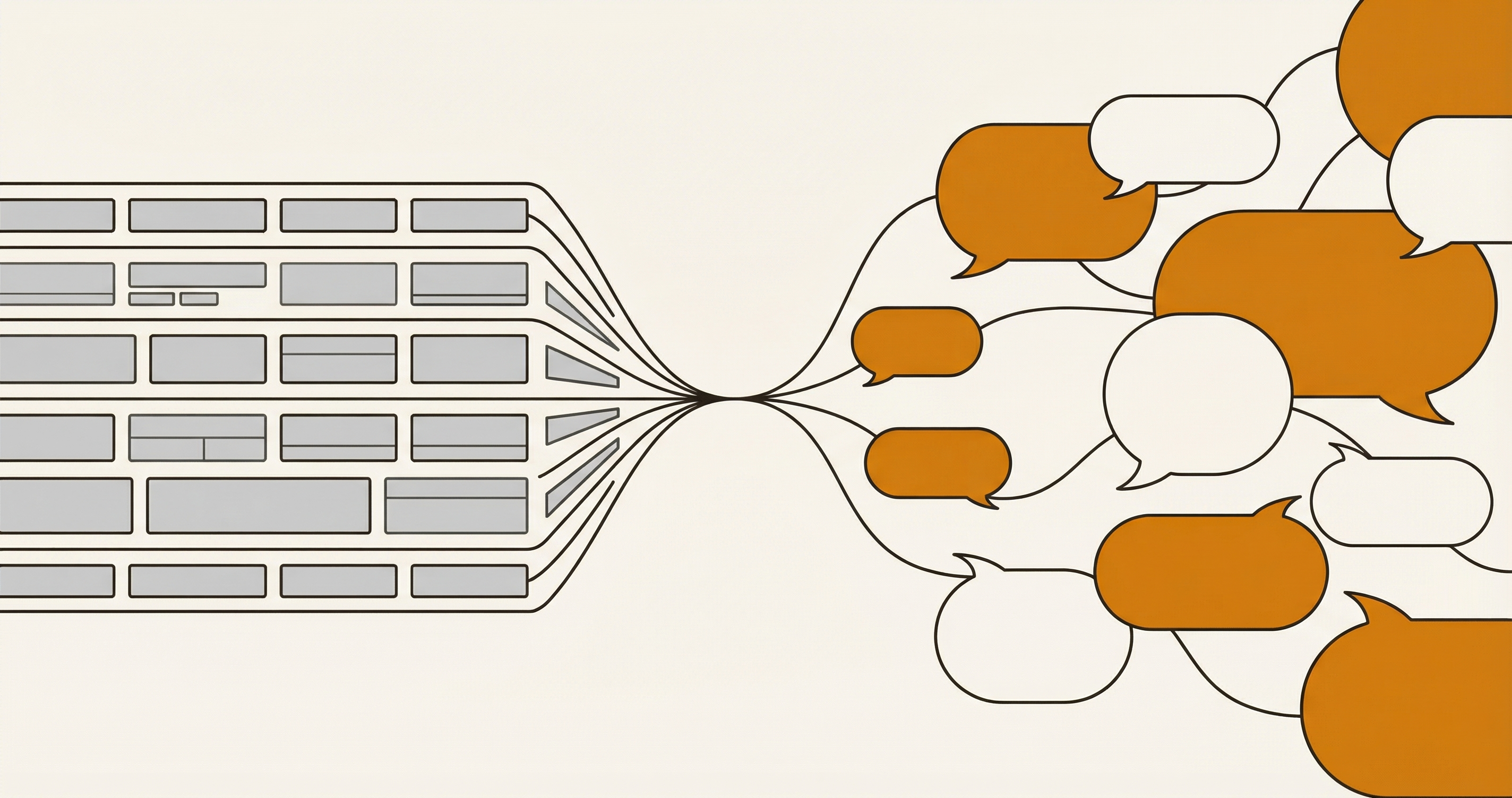
The same information could be collected in an exchange that feels like talking to a knowledgeable person, and the experience in the brain of the person on the other side would be completely different.

The commitment loop that conversational intake activates
This is where the psychology gets genuinely interesting.
Robert Cialdini’s research on commitment and consistency shows that once someone takes a small voluntary action, they’re significantly more likely to continue along that path. The first step creates a psychological investment that makes the next step easier.
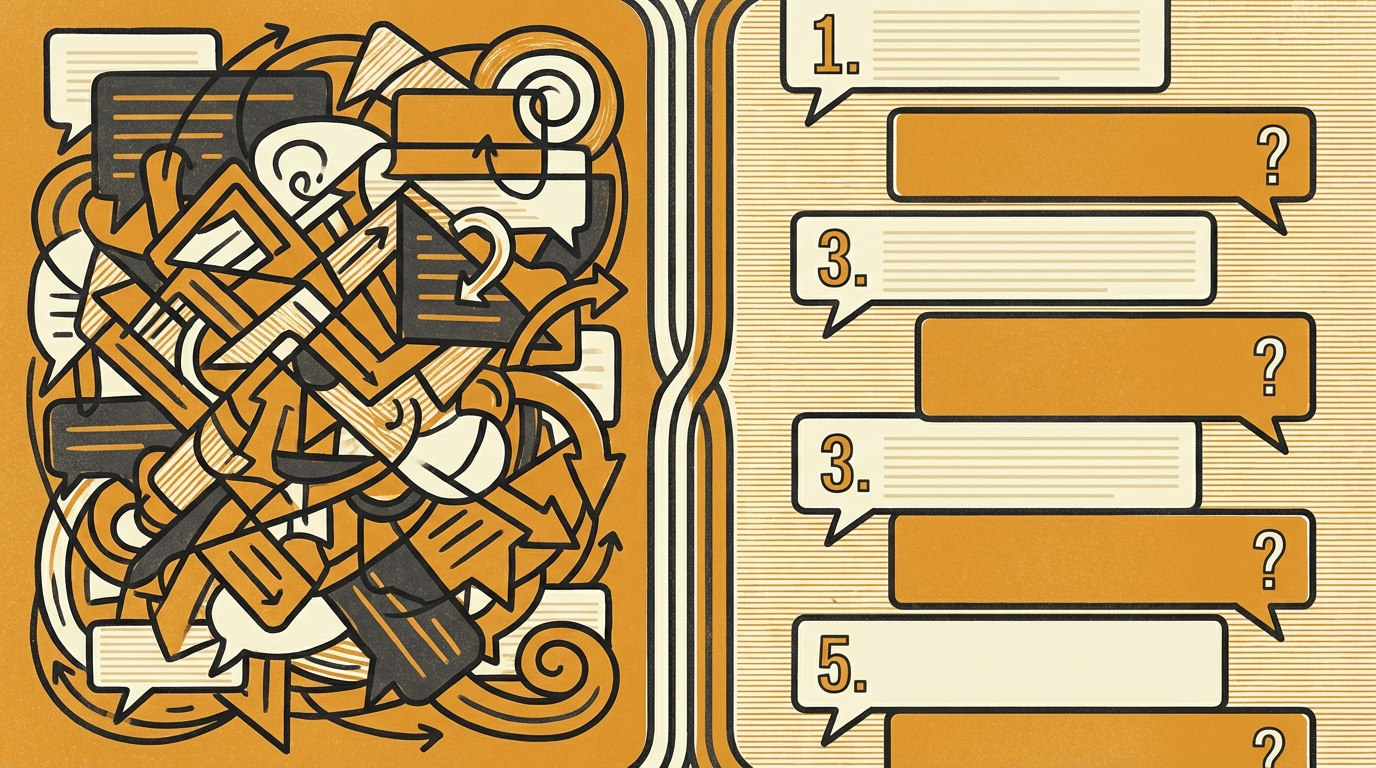
Traditional forms don’t activate this. They present everything at once, a wall of fields, no momentum, no small wins. The person has to commit to the entire experience before they’ve started any of it. That’s a high bar, and most people don’t clear it.
Conversational intake works differently. The first question is small and easy: “what brings you here today?” Someone answers it. They’ve now made a small commitment. The next question follows naturally. They answer that too. By the third or fourth exchange, they’re invested in the conversation, and the research suggests 92% of people who answer the first question in a conversational flow complete the entire thing, compared to roughly 31% for traditional forms.
Same information. Same audience. Completely different psychology underneath.
The candle problem
Forms have been the default way to collect information online since the early web. They weren’t chosen because they were the best possible solution. They were chosen because they were the only available solution, and nobody questioned them once the habit was established.
People used candles for thousands of years. That doesn’t mean candles were the optimal light source. It just means nobody had built something better yet, and once the light bulb existed, the switch happened quickly because the improvement was too obvious to ignore.
The same shift is happening with forms. Not because forms are broken, for simple, low-stakes data collection they still work fine. But for the moments that actually matter, capturing a qualified lead, onboarding a client, screening a candidate, the format has a ceiling that no amount of field-reduction is going to fix.
What that ceiling looks like in practice, and what the data says about what’s on the other side of it, is worth reading if you’re running any kind of intake that matters for your business.
What this means for your conversion rate
The cognitive science has a practical implication: the businesses that switch from forms to conversational intake aren’t just getting a better user experience. They’re removing the biological friction that was causing most of their abandonment in the first place.
When someone fills out a conversational intake that asks one question at a time, their working memory isn’t overwhelmed. The commitment loop activates from the first answer. The mild evaluation stress of a form isn’t there, it feels like being asked, not tested.
This is why the completion rate difference between forms and conversational intake isn’t marginal. It’s not 5% better or 10% better. It’s the difference between 31% and 92%, because you’re no longer fighting human neuroscience. You’re working with it.
The data on what you lose from abandoned forms is sobering on its own. But understanding why people abandon, the working memory ceiling, the evaluation response, the missing commitment trigger, changes how you think about the fix.
Shorter forms are a workaround. Conversational intake removes the problem at the source.
If you’re running intake on your website right now, you can see what the conversational alternative looks like without any technical setup. Replace one form, watch what happens to your completion rate.
For the deeper dive on how ioZen uses this to qualify leads, route submissions, and score every conversation automatically, see how conversational intake works in practice.
Tags:

Written by
Jay Moreno
Founder & CEO, ioZen
Technical founder with 20+ years building platforms across Latin America. Founded PATIOTuerca (first Ecuadorian startup to IPO), Vive1, Evaluar.com, and Taxo. Now building ioZen to liberate humanity from bureaucracy.