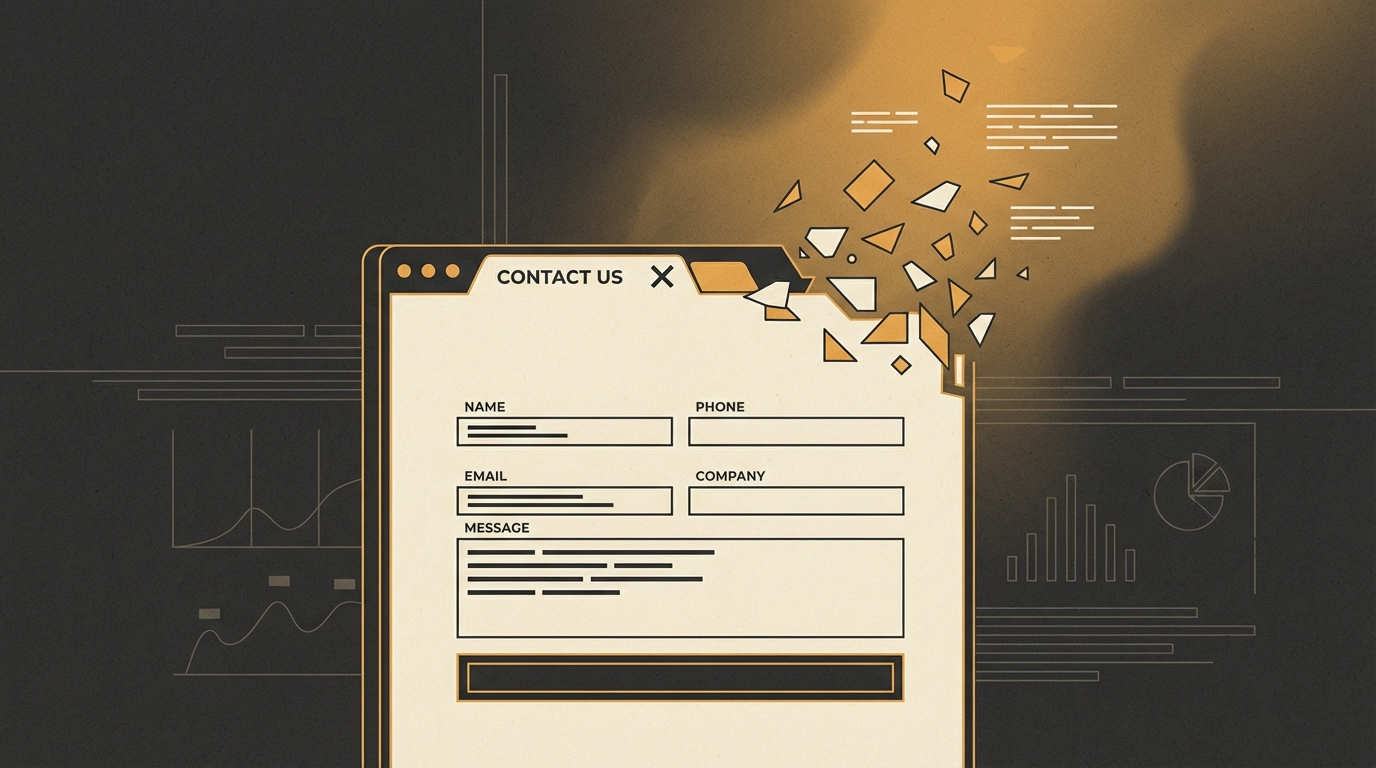



The standard advice right now is: replace your forms with an AI chatbot. It sounds obvious. Forms are rigid and annoying. AI is flexible and smart. Connect them and you get something better than both.
In practice, it doesn’t work that way.
I’ve built an intake product, watched hundreds of businesses use it, and talked to enough people about their failed AI chatbot experiments to say this with some confidence: pure AI agents are a bad fit for most business intake scenarios. Not because AI is bad. Because flexible and smart are the wrong properties for collecting structured information reliably.
What pure AI gets wrong
When someone contacts a law firm about a case, the firm needs specific information. What happened. When. Whether there’s an existing attorney. What kind of outcome they’re looking for. If that information isn’t collected, the intake failed, regardless of how natural the conversation felt.
A pure AI chatbot can go in any direction the user takes it. That’s what makes it feel conversational. It’s also what makes it unreliable for intake. If a user starts describing their situation in detail before the AI has established the basics, the AI might follow that thread and never get back to the fields that matter. It might ask the same question twice. It might interpret a vague answer as complete when it isn’t.
There’s also a speed and reliability issue. Pure AI responses have latency. They can hallucinate. They behave differently from session to session. For a high-volume intake form, say a real estate agency running hundreds of inquiries a week, that unpredictability is a real problem. You can’t build a reliable pipeline on top of a system that occasionally goes sideways.
What forms get wrong
The other extreme is a traditional form, and the problems there are well-documented. They’re interrogative rather than conversational. They ask all their questions at once, in the same order, with no ability to adapt based on what someone tells them. If you need to know someone’s budget only if they’re a homeowner, a standard form asks everyone or asks no one.
More practically: forms feel cold. There’s a particular kind of friction that comes from seeing a page of fields, especially when some of them don’t apply to your situation, or when the question is hard to answer without knowing more context. People quit. The data shows they quit, consistently, in large numbers, usually before the last few fields.
The case for deterministic with AI intelligence
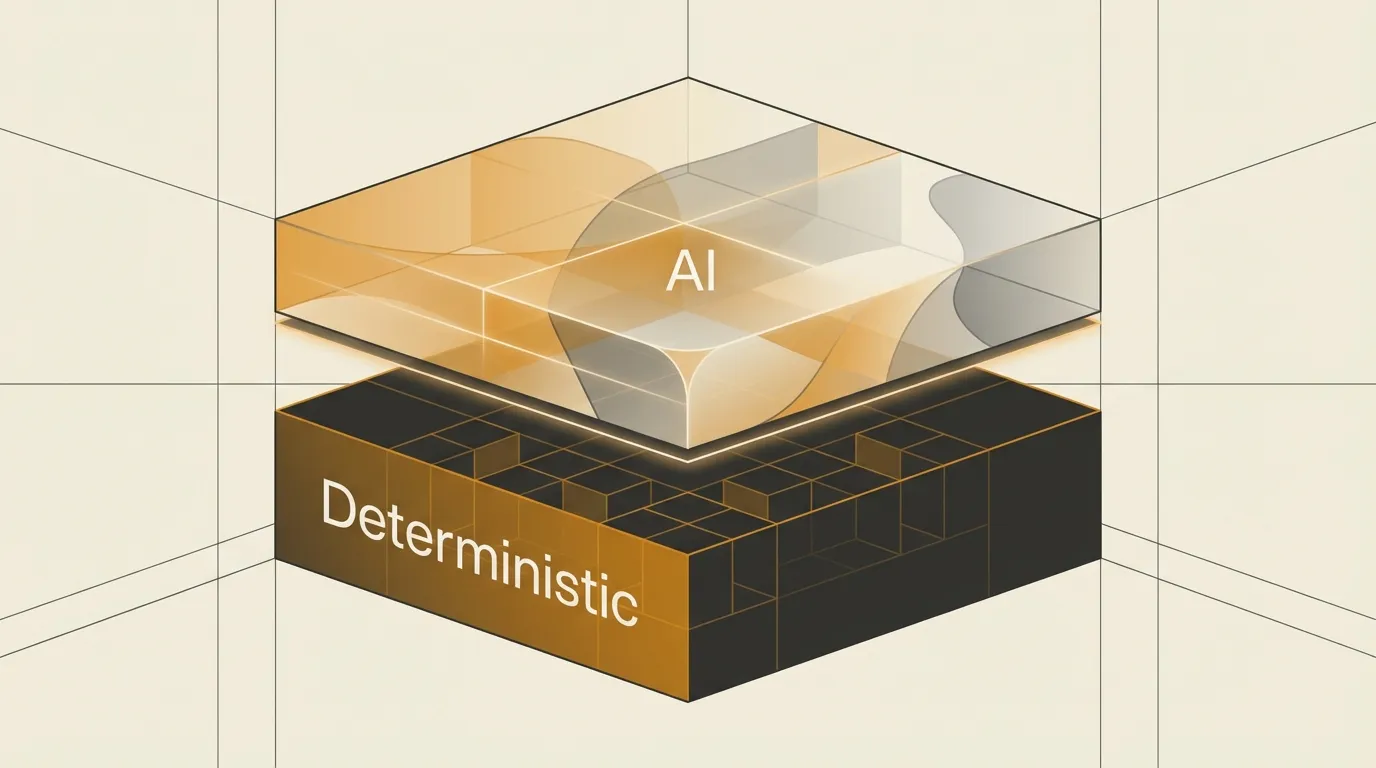
The approach that actually works is a combination: a structured backbone of questions that always get asked, in a logical order, with branching based on answers, and AI intelligence layered into specific questions where it adds real value.
The deterministic backbone means the business gets the information it needs, every time, in a predictable format. There’s no question that gets skipped because the conversation went in a different direction. The intake process is auditable and consistent.
The AI layer handles the parts where rigidity fails. When someone’s answer to “describe your project” is a paragraph rather than a selection from a dropdown, AI can read that paragraph and extract the signal. When an answer is vague, AI can ask a smart follow-up rather than accepting the ambiguity. When branching logic needs to account for a scenario that wasn’t pre-built, AI can adapt.
The result is an intake process that feels like a conversation because it is one, but that reliably delivers structured data at the end.
Why this is faster and more reliable
A system with a deterministic backbone isn’t waiting for an LLM to decide what to say next on every turn. Most of the conversation runs on logic: branch A or branch B, next question, expected input type. AI kicks in where it genuinely helps: parsing natural language, qualifying ambiguous answers, handling edge cases. The ratio is weighted toward the deterministic side, which means the system is fast, consistent, and cheap to run at scale.
It’s also predictable in the sense that matters to businesses: you can tell a client “this is what our intake collects” and mean it. You can audit why a particular submission went to a particular team. You can build workflows on top of the output because you know what shape the output will take.
That’s not something you can say about a pure AI chatbot.
This is the architecture behind ioZen. If you’ve been looking at AI chatbots for your intake process and finding them too unpredictable, or looking at your current form and finding it too rigid, the answer isn’t to pick one extreme. It’s to combine the right parts of both.
Tags:

Written by
Jay Moreno
Founder & CEO, ioZen
Technical founder with 20+ years building platforms across Latin America. Founded PATIOTuerca (first Ecuadorian startup to IPO), Vive1, Evaluar.com, and Taxo. Now building ioZen to liberate humanity from bureaucracy.