

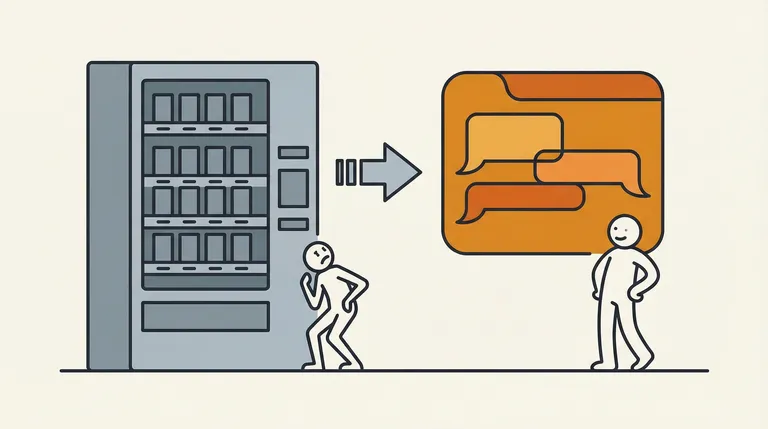
You need your kitchen renovated. You find a contractor online who looks good, reviews check out, portfolio is solid. You click “Request a Quote.”
Fifteen fields load.
Name. Email. Phone number. Street address. City. Zip code. Project type (dropdown). Square footage (how would you even know?). Budget range. Desired start date. Property ownership status. Photo uploads. How did you hear about us. Terms and conditions checkbox. A “describe your project” textarea shoved at the bottom.
You haven’t said a single word about your kitchen yet. About the ugly countertops. About the cabinet doors that don’t close right. About the weird layout that makes cooking for more than two people impossible.
The form doesn’t care about your kitchen. It cares about its fields.
What if you could just say what you need?
Imagine clicking that same button and getting a conversation instead. You type: “I want to redo my kitchen. The countertops are falling apart, the layout is terrible, and I’d love to add an island if the space allows it.”
The system reads that and asks a follow-up: what’s your approximate kitchen size? What kind of countertop material are you leaning toward? Do you have a rough budget in mind?
No dropdowns. No red asterisks screaming at you. Just a back-and-forth where you describe your project the way you’d describe it to a friend. And the system asks what it still needs to know.
That’s not a hypothetical. We built it.
The experiment
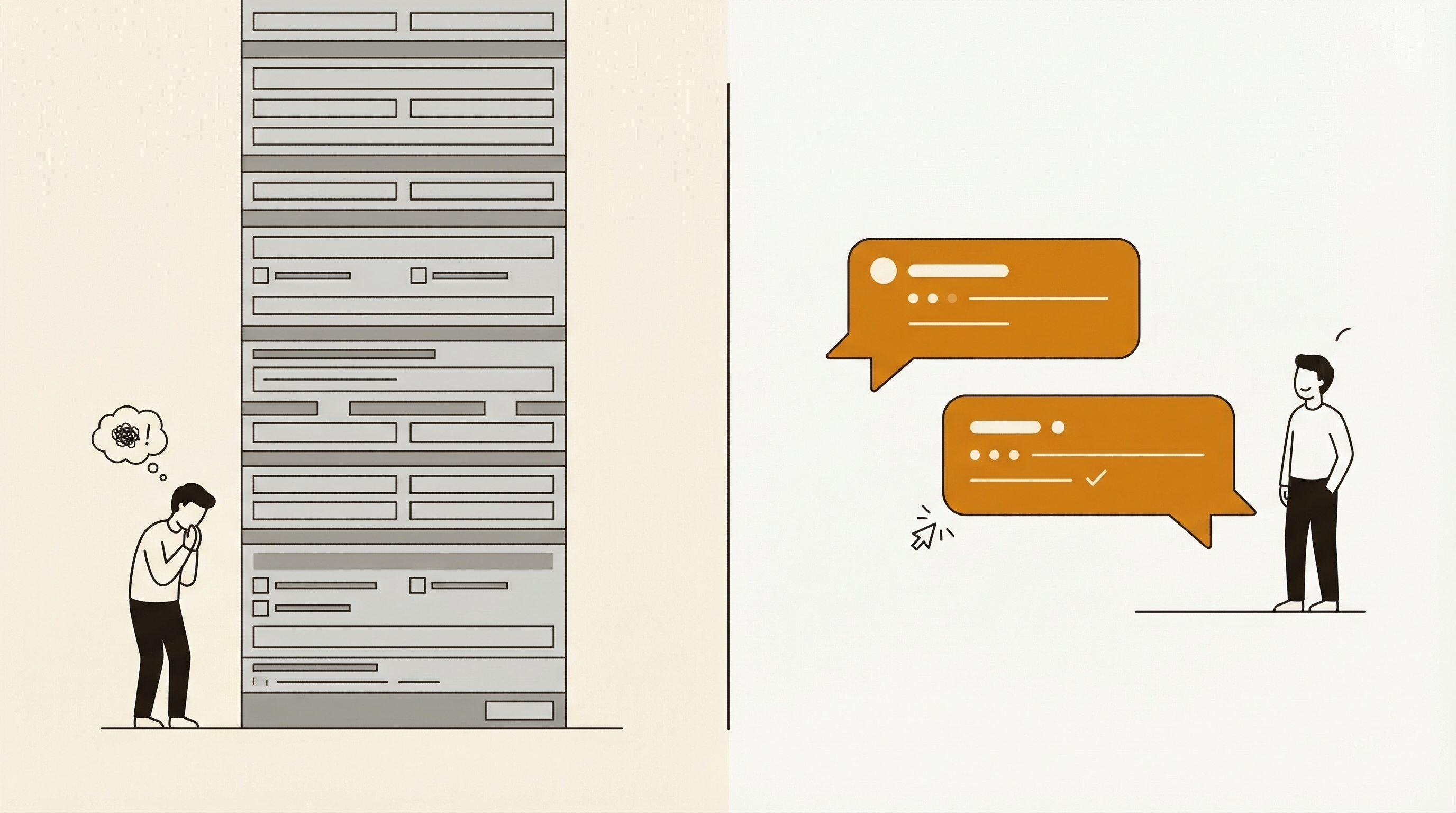
We stopped talking about this in the abstract and built both experiences side by side. Same scenario: a contractor needs information to quote a kitchen renovation. On the left, the traditional 15-field form. On the right, an ioZen IntakeBot.
Not a mockup. Not a Figma prototype. A real form next to a real IntakeBot you can actually use. We published it as a live demo page so anyone can try it.
The difference hits you in the first ten seconds.
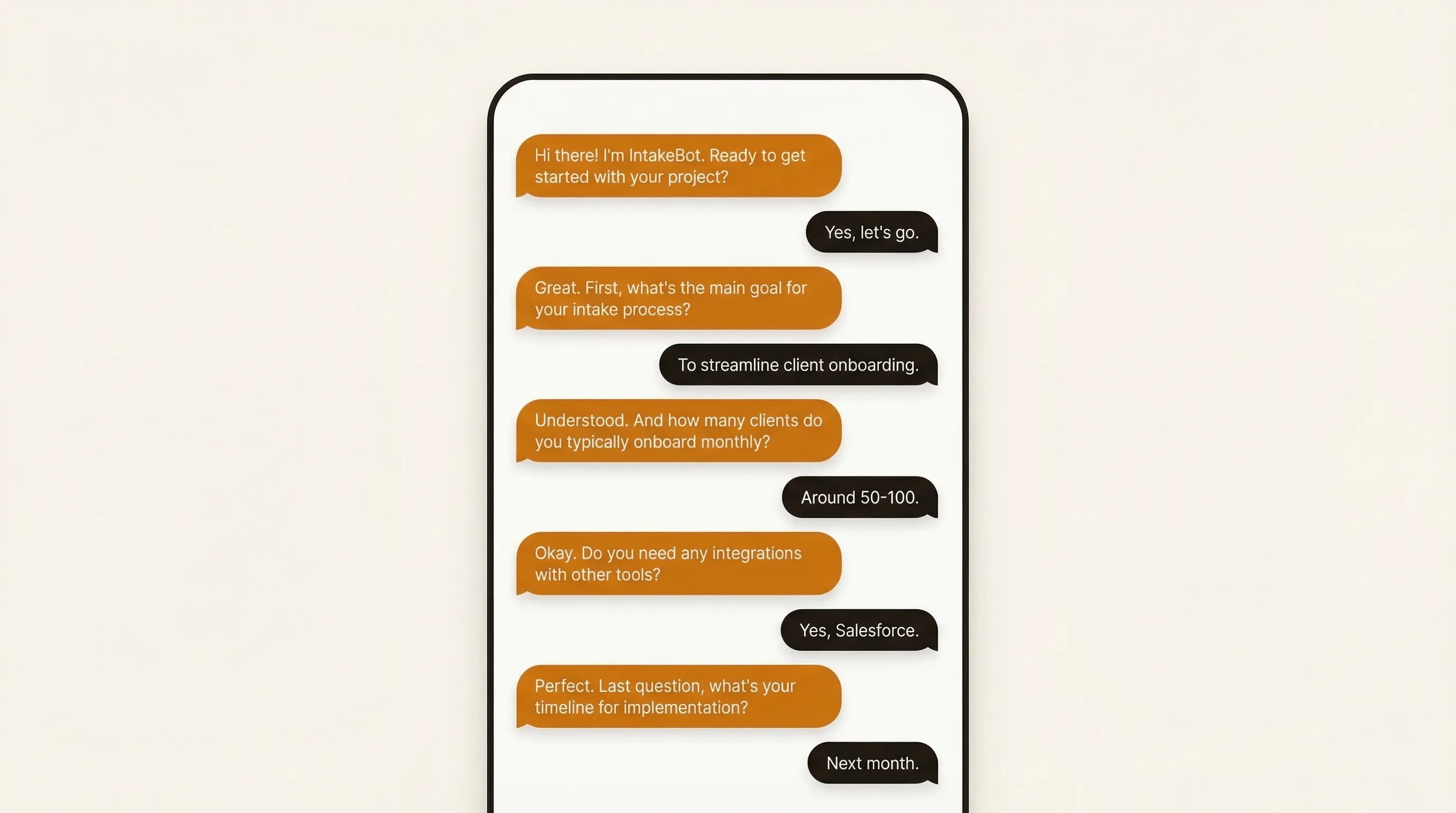
Instead of 15 fields, the IntakeBot has a conversation. It asks the right questions in the right order.
We recorded it
We also filmed the entire experience. In this video, we walk through both options, field by field and question by question, so you can see the difference without having to try it yourself.
The other side of the screen
The difference isn’t just for the person filling things out. Look at the contractor’s side.
With the traditional form, they receive a record of disconnected data. A “project details” field where the customer squeezed three lines of text that explain almost nothing. Numbers without context. Budget range “50k-100k” with no sense of priorities. And most likely a follow-up email asking for the information the form failed to capture.
With the IntakeBot, the contractor gets a complete, organized record in their Process Board. The conversation pulled out the information that matters, in the right order, with the context needed to actually prepare a quote. No follow-up emails. No phone calls to clarify what the form missed.
Better experience for the customer. Better information for the business. Same two minutes.
What this means for your forms
If you’re still using a traditional contact form or quote request form, you’re probably losing people before they finish. Not because your service is bad. Because your form is asking for 15 things when a conversation could handle it in five exchanges.
You don’t need a developer to change this. ioZen’s no-code builder lets you describe what information you need, and the IntakeBot figures out how to collect it through a natural conversation.
Try it yourself
Open the live demo and try both experiences. The traditional form is on the left. The IntakeBot is on the right. Give it two minutes.
And if your website still uses forms like that, you can replace them in five minutes. No code. No complicated setup. Just describe what information you need and launch your own IntakeBot.
Tags:

Written by
Jay Moreno
Founder & CEO, ioZen
Technical founder with 20+ years building platforms across Latin America. Founded PATIOTuerca (first Ecuadorian startup to IPO), Vive1, Evaluar.com, and Taxo. Now building ioZen to liberate humanity from bureaucracy.